
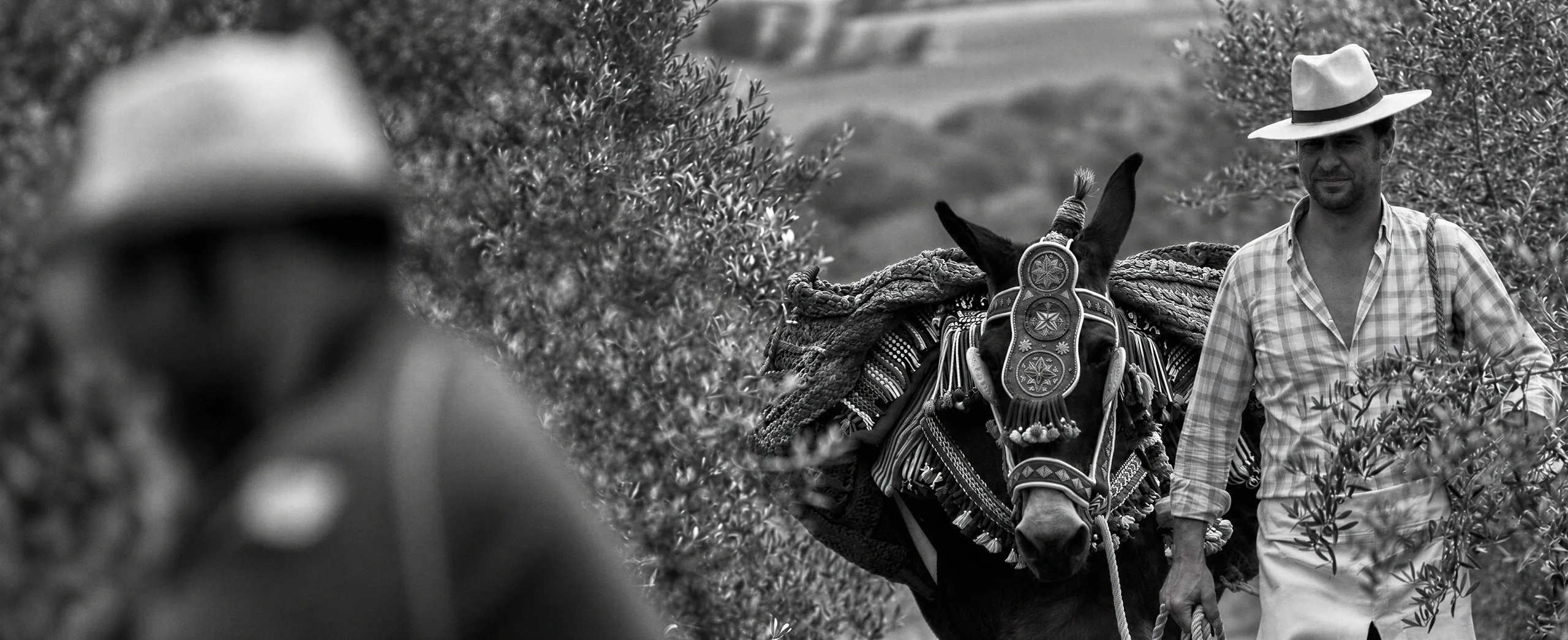
Mill and olive grove in Carmona Finca La Matilla
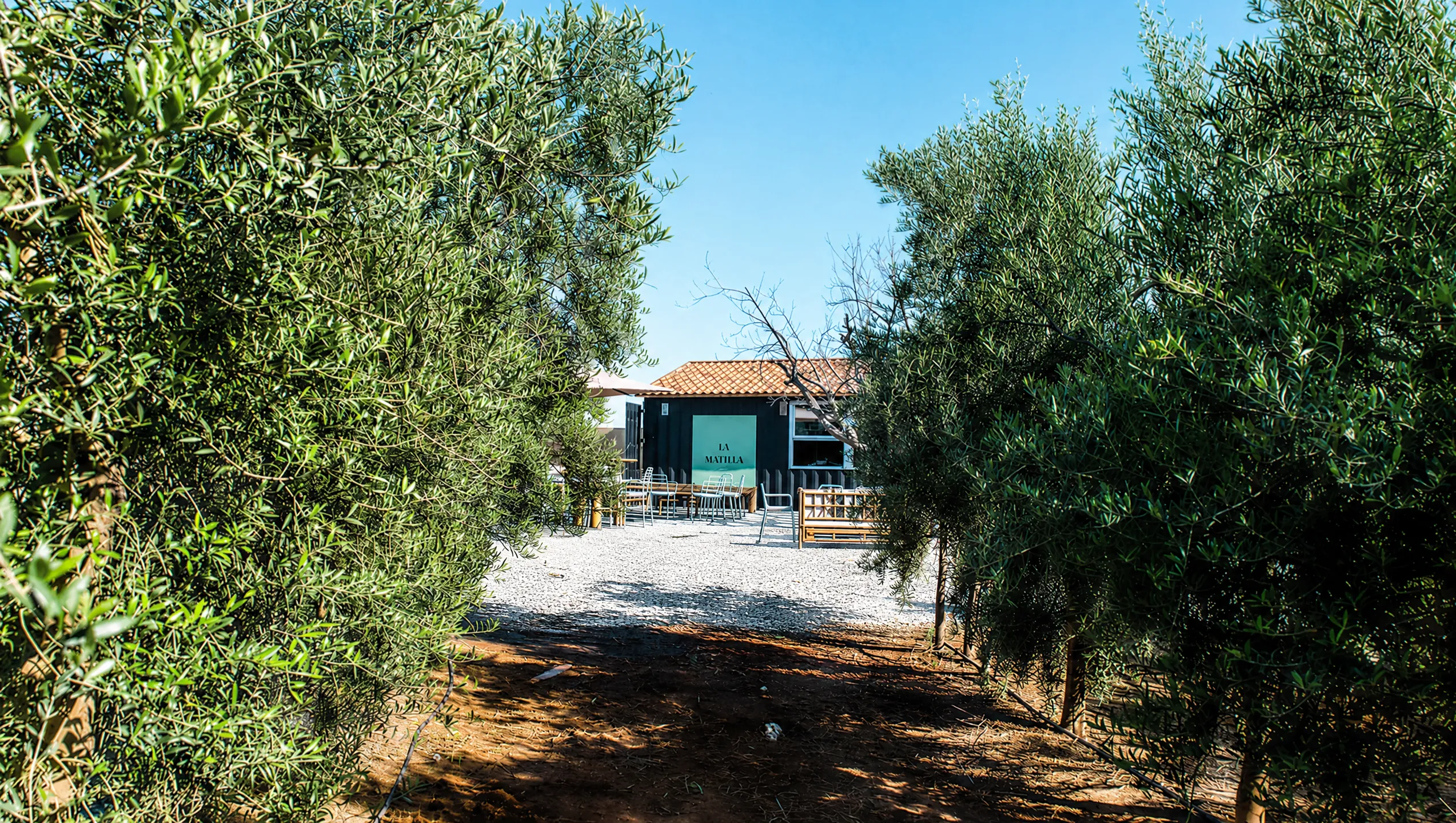
More than forty hectares of olive groves nestled in the gentle hills of the Carmona countryside. Sun-warmed earth, clear Andalusian light and extra virgin olive oil grown and produced right here, at the heart of our estate.
Analysed by the Instituto de la Grasa (CSIC)
Discover the estateLa Matilla archive
A gentle hill in the Carmona countryside
Finca La Matilla lies in the heart of Andalusia, among the gentle hills of the Carmona countryside, just a short distance from Seville. For more than 150 years, our family has cultivated this land, nurturing a deep-rooted tradition of olive growing and olive oil production.
The estate's sandy, well-drained soils provide favourable conditions for olive trees to thrive, allowing their roots to breathe while retaining the moisture they need. The warmth of the southern sun and the distinctive light of the Andalusian countryside complete the picture.
Here, the olive grove is at the heart of everything. We carefully tend our trees and harvest the olives at the right stage of ripeness, bringing together generations of knowledge and respect for the land to create our extra virgin olive oil.
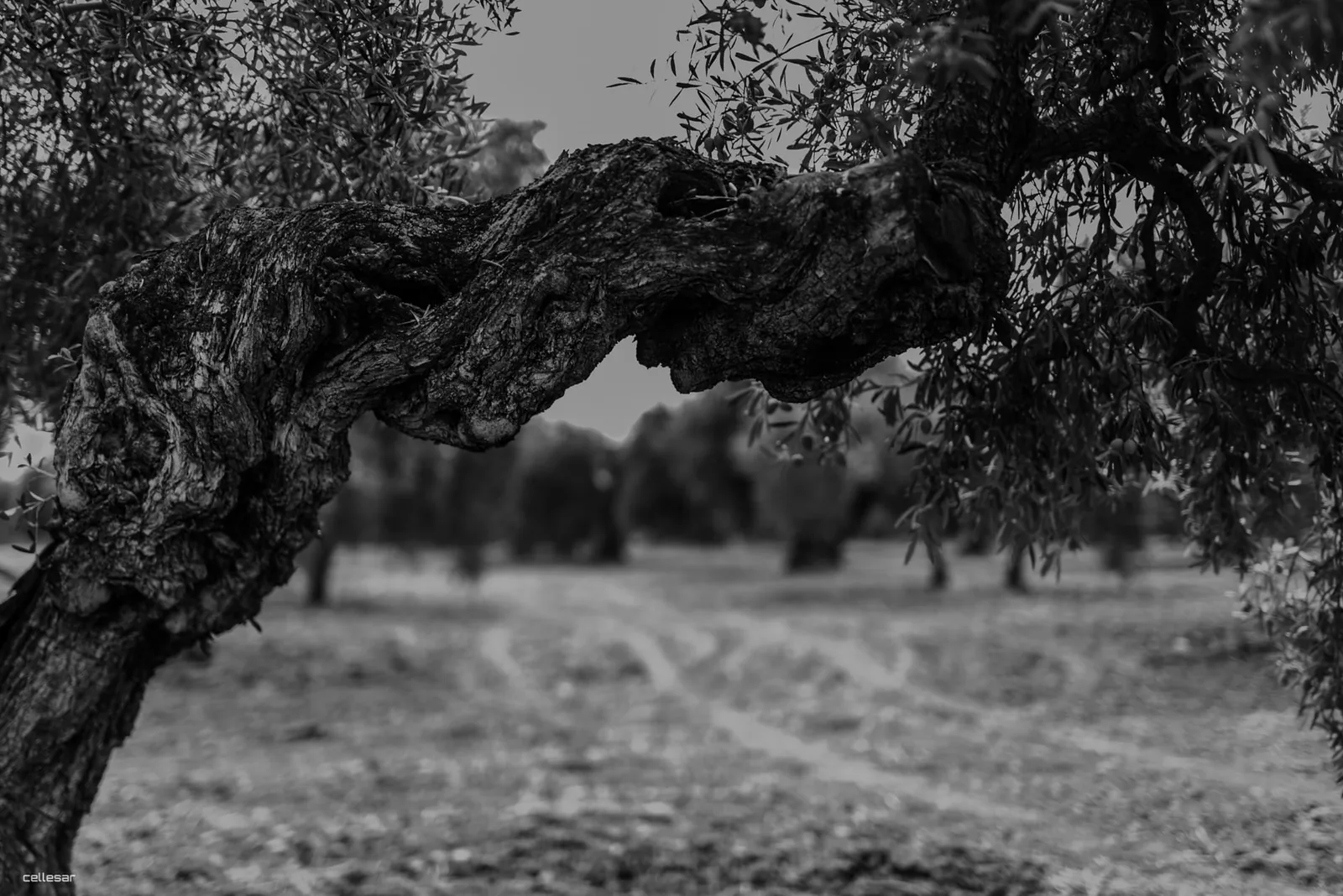
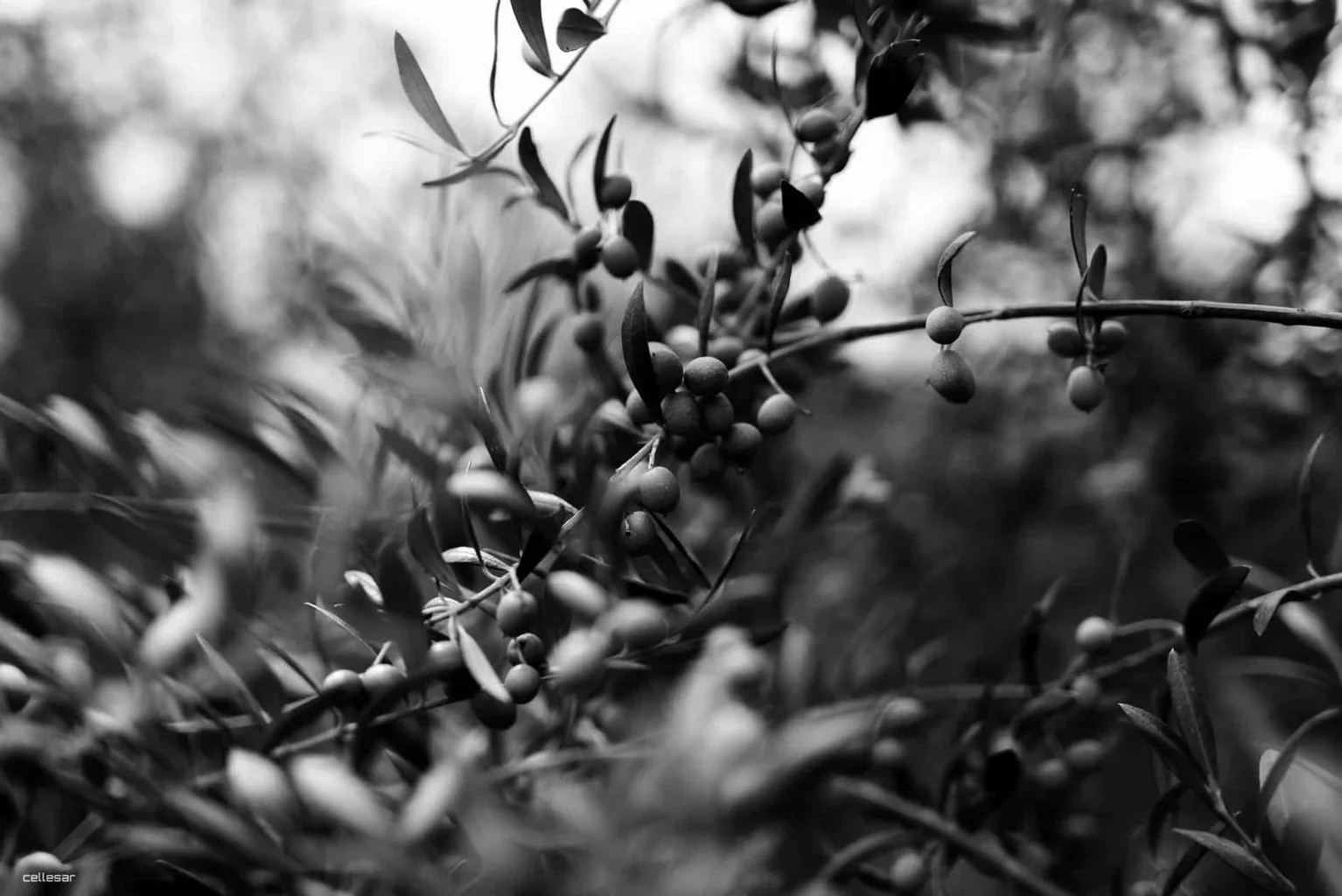
- +40 ha
- of olive grove in the Carmona countryside, Seville.
- Mill
- of our own: the oil is made right here on the estate.
- Arbequina
- as our main variety, alongside Picual, Hojiblanca and Arbosana.
- Pruning
- returned to the earth as organic matter.
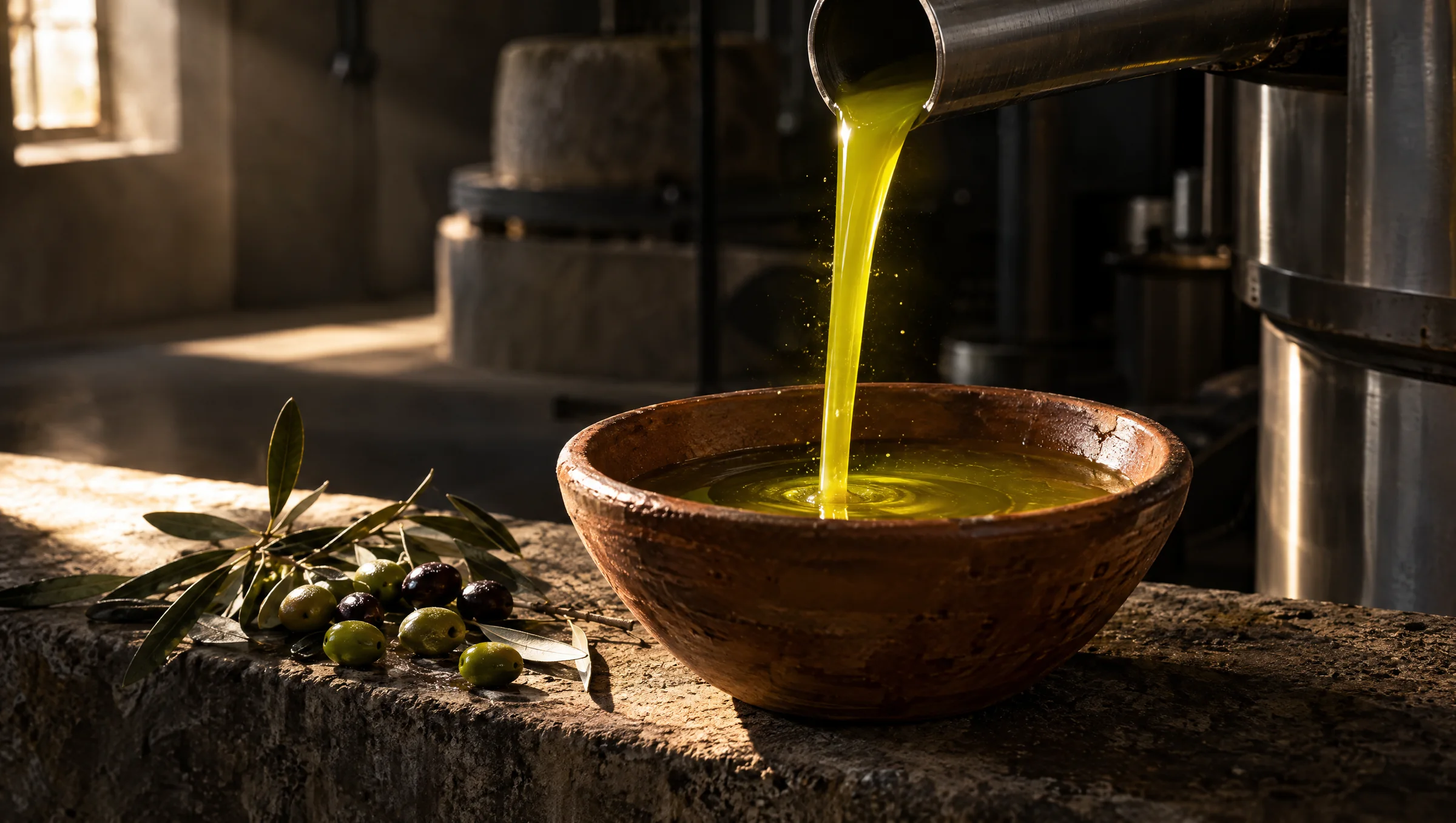
The first oil of the harvest
There is one moment each year that captures it all: when the first oil of the season begins to flow. Green, intense and slightly cloudy, it releases the aroma of freshly milled olives, with a distinctive touch of bitterness and peppery pungency that reflects its natural polyphenol content.
Just a few hours separate the olive harvest from milling, and the oil is extracted at low temperatures. This careful process helps preserve the olives' fresh aromas and the oil's valuable polyphenols.
See the process step by stepFrom the branch to the bottle
Five steps, always in the same order and never rushed. This is how extra virgin olive oil is made the traditional way.
-
Cleaning
We remove leaves and twigs and clean the olives before taking them to the mill.
-
Milling and malaxing
We crush the olives into a paste. Then we mix it gently so the tiny droplets of oil come together.
-
Pressing
We spread the paste onto mats known as capachos. Pressing separates the liquid from the solid remains.
-
Settling
We leave the liquid to rest so that the oil separates from the water and the sediment.
-
Bottling
We bottle the oil and protect it from light and heat to preserve its qualities.
Instituto de la Grasa · CSIC · Seville
The final word belongs to the laboratory
Before it reaches your table, our oil is analysed at the Instituto de la Grasa, the centre of the Spanish National Research Council (CSIC) devoted to the study of olive oil since 1947.
It is not a required step. We do it because we want everything we say about our oil to be confirmed by an independent laboratory, not just by our own palate.
- Acidity
- the freshness of the fruit and the care taken at the mill.
- Peroxides
- whether the oil has kept without oxidising.
- UV absorbance
- the purity and quality of the extra virgin oil.
- Polyphenols
- the olive’s natural antioxidants, which give the oil its bitterness and peppery bite.
A land that takes care of itself
At La Matilla, nothing goes to waste. Olive-tree prunings are returned to the soil as organic matter, we respect the wild plants that grow naturally across the estate, and a kitchen garden and orange grove thrive among the olive trees. It is our way of working in harmony with the land, making the most of what it gives us and allowing nature to follow its own rhythm.
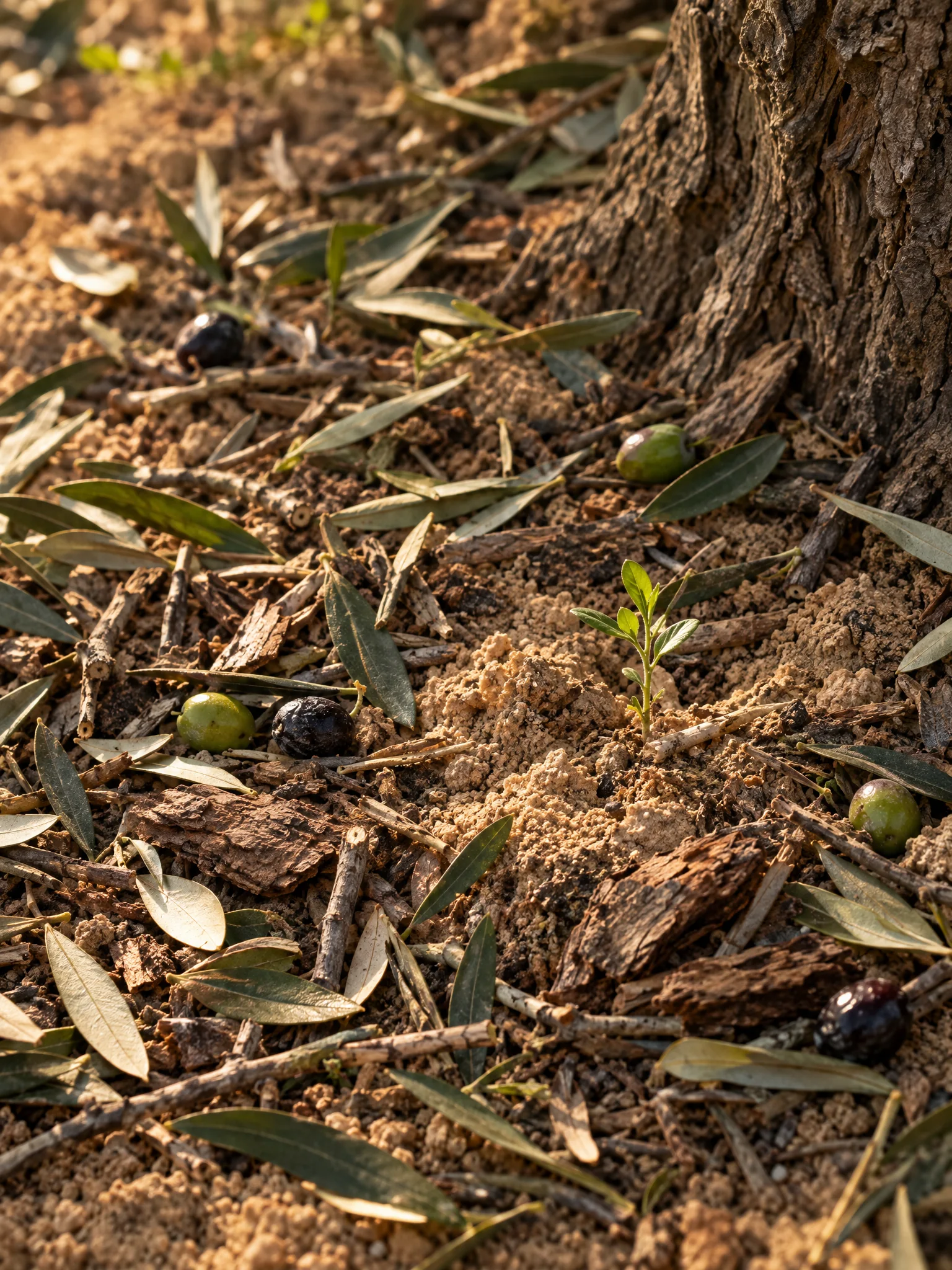
Prunings return to the earth
After each pruning, the olive branches are shredded and left in the grove itself. Over the months, they turn into organic matter that returns nutrients to the soil, retains moisture and protects the soil from the sun of the Carmona countryside. A closed cycle that begins and ends with the olive tree.
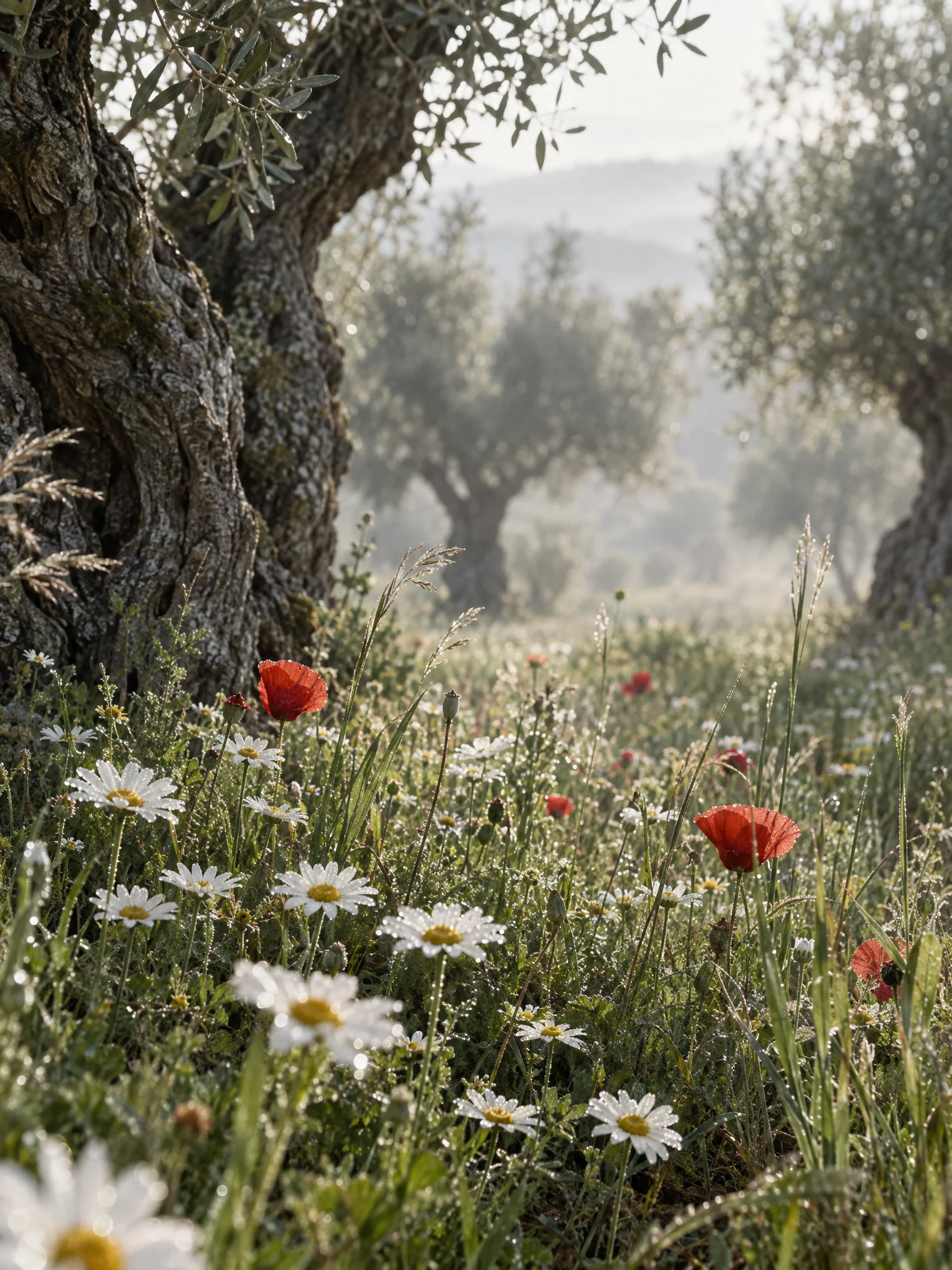
The wild flora of the countryside
Between the rows of olive trees we let the grass and wild flowers grow: daisies, poppies and native plants. This green cover slows erosion, keeps the soil alive and gives shelter to the insects and birds that are part of the olive grove’s natural balance.
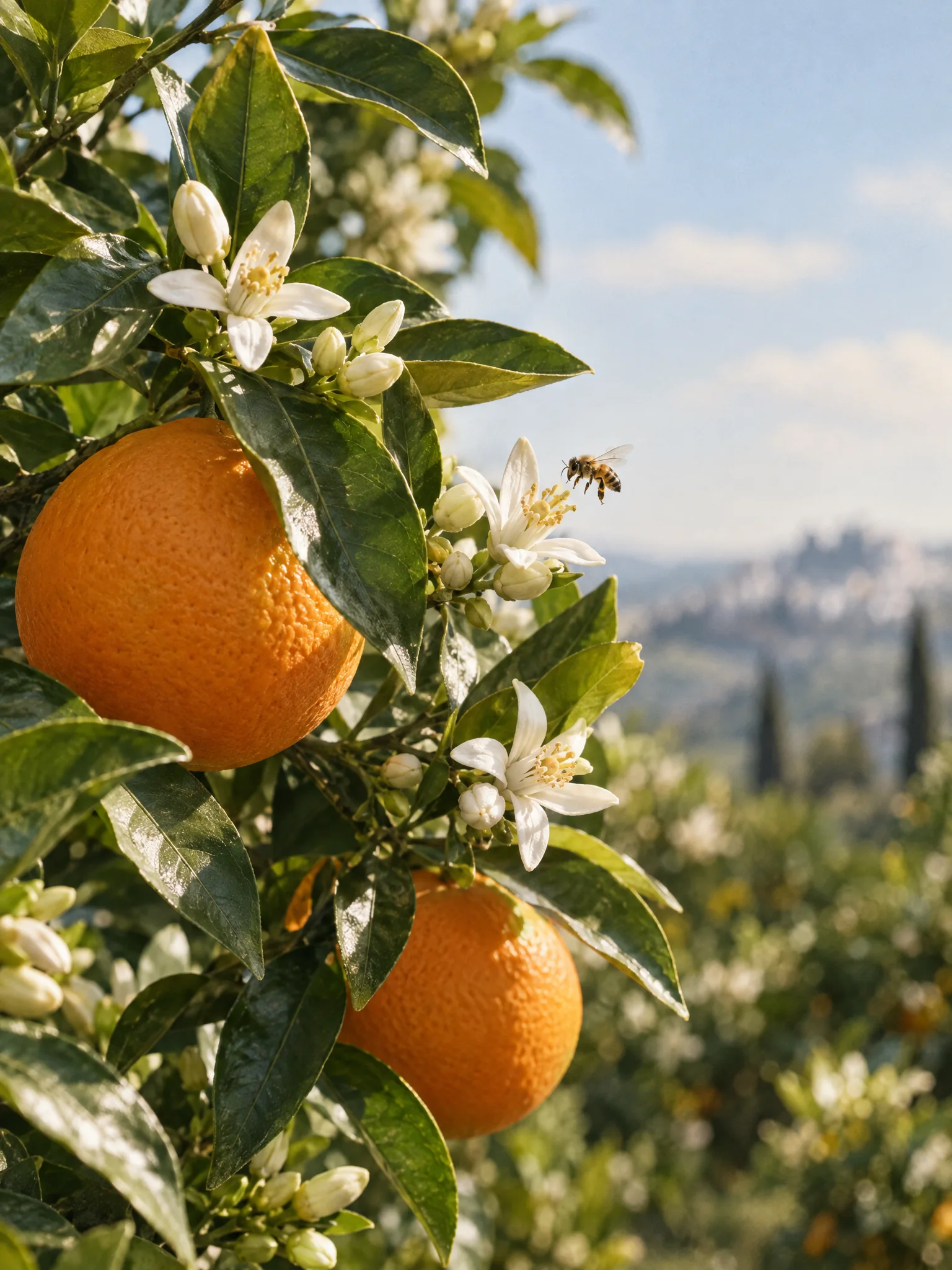
The Kitchen Garden and Orange Blossom
There's more to La Matilla than olive trees. Our estate is also home to an organic vegetable garden, an orange grove and a variety of fruit trees. In spring, the sweet scent of orange blossom drifts through the olive groves, a reminder of the richness of the Andalusian land and the care that goes into nurturing it.
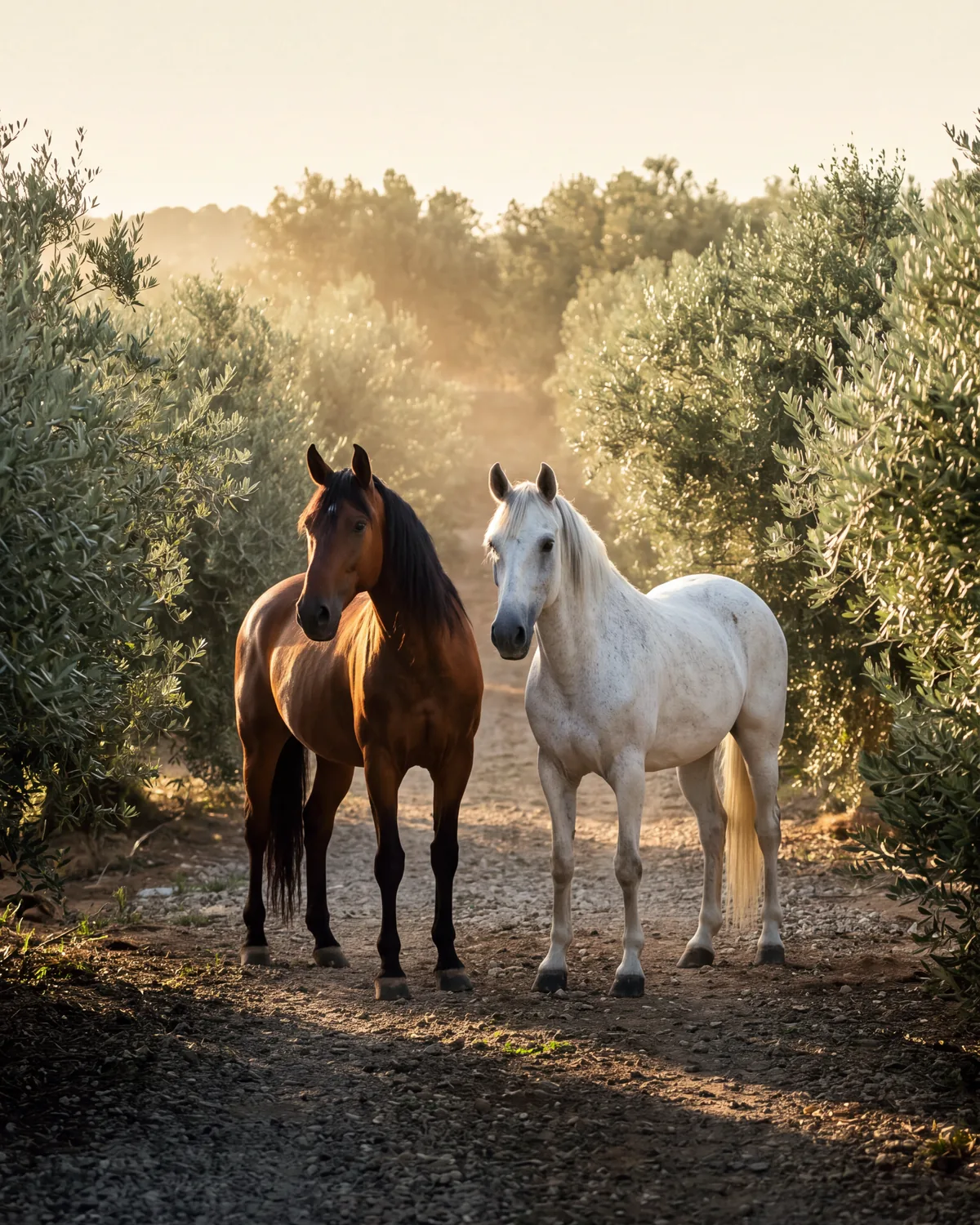
The Horses of La Matilla
Horses are an integral part of life at La Matilla. Their presence brings even more life, authenticity and charm to our rural surroundings.
What this land gives, award-winning
- Gran Oro Virtus 2022AOVE Arbequina
- Gold · Canada IOOC 2023AOVE Picual
- Silver · London IOOCArbequina, 2020, 2021 and 2022
Come and see it for yourself
Stroll through the olive grove, step inside the mill and taste our oils where they are born. Visits and tastings for groups, by appointment.