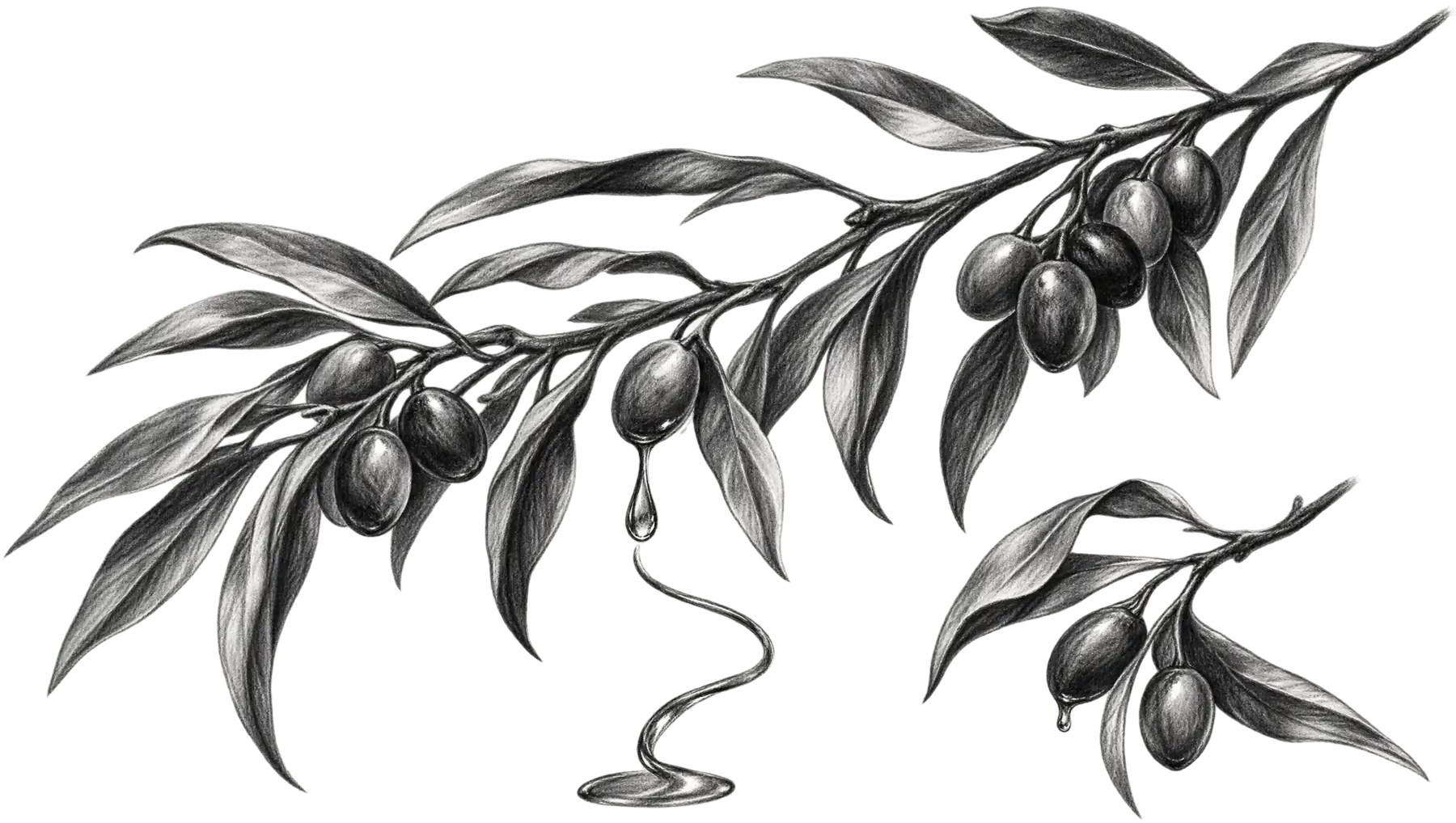
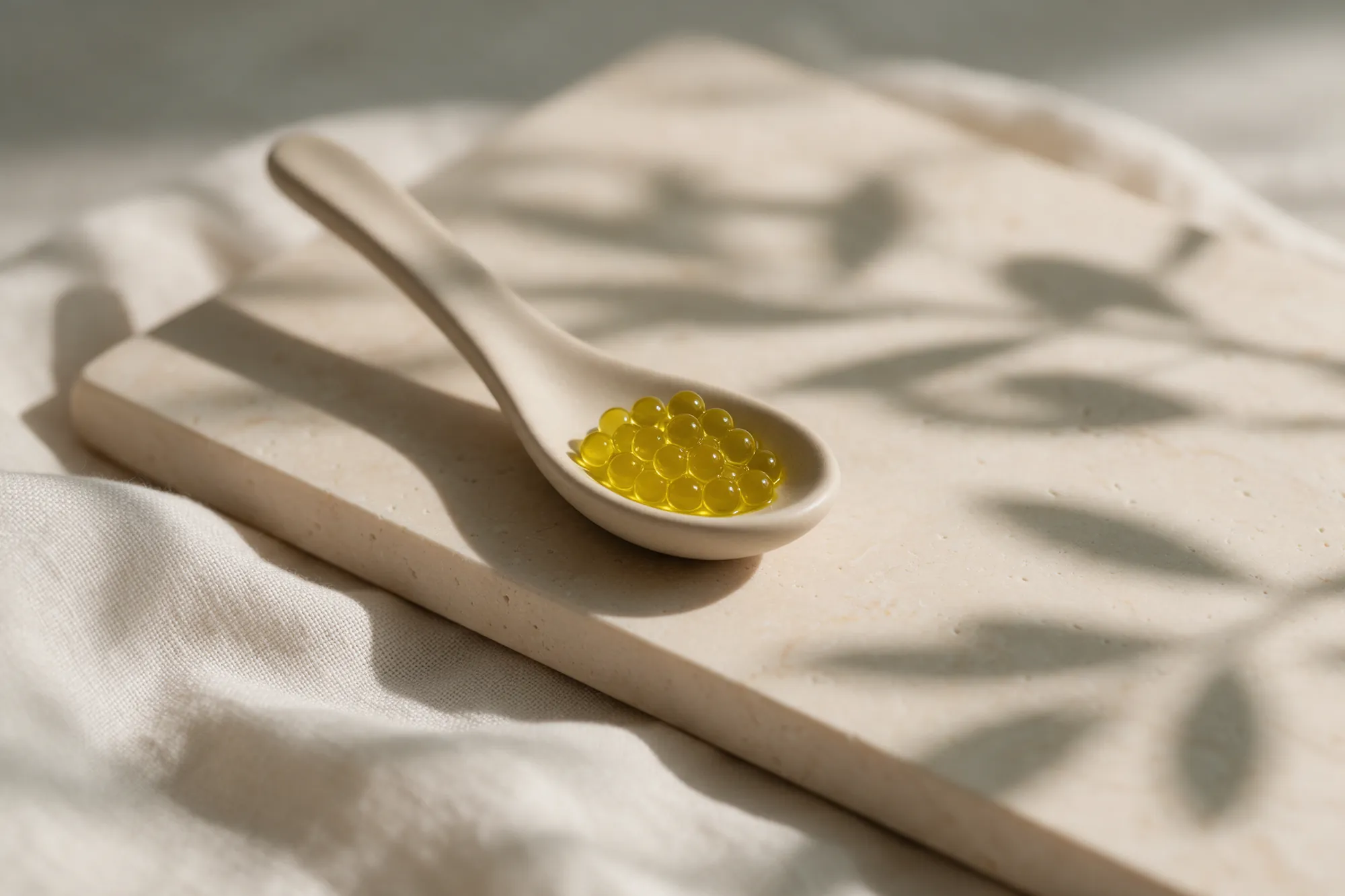
Haute cuisine is in fashion! More and more gourmets and food lovers are venturing to try their skills at the stove at home. All liquids, absolutely all of them, can be spherified, giving them a shape similar to caviar. But if there is one popular product in this category, it is Extra Virgin Olive Oil. How do you make Olive Oil spheres? We will tell you!
How do you make olive oil spheres?
Spherification is without doubt an easy and fun technique that can make a big difference to your dishes. But let's not go on any longer, let's see how to do it! Our La Matilla Extra Virgin Olive Oil has been used in a great many restaurants for this kind of preparation. To create extra virgin olive oil spheres you only need to mix the AOVE with an alginate (the name given to the organic salt obtained by treating various brown algae found in seas and oceans using different techniques). This seaweed is perfect for vegans, does not alter the flavour and is of course ideal for spherifying extra virgin olive oil, as it preserves all its properties. In our case, we are going to use our La Matilla Extra Virgin Olive Oil for the spherification.
First of all, we need to prepare the AOVE. To do this, we put it in the fridge for about 2 hours; the longer the better, to make sure it cools properly.
Once it is cold enough, put it in a saucepan, and this is where we add the agar seaweed and stir slowly. Ready? Then it is time to turn on the heat. Set the heat to medium to avoid a sudden blast of heat and stir constantly until the liquid starts to boil. Once it does, wait two or three minutes and take it off the heat.
Using a syringe (without the needle), draw up the liquid.
In a deep container of seed oil at a very low temperature, slowly start to make drops of AOVE with the help of the syringe.
You will see small, perfectly round, gelatinous-looking drops begin to form at the bottom of the container!
Why do we use cold seed oil? Because when it comes into contact with our product, it makes the seaweed solidify immediately, acting as a mould.
Once all the spheres are made, we can scoop them out with a spoon and rinse them using a sieve.
Be sure to use cold water, because exposing them to a temperature of 60º or above will make them melt.
Depending on the amount of agar seaweed used, the pearls will either melt in the mouth or become solid. The idea is to use less to improve the eating experience. Around two grams of agar is a suitable amount for gelling 170 ml of AOVE, or even less!
Olive oil spheres in different dishes
Right, we have our spheres and… now what? It turns out that AOVE spheres are used in a great many recipes. We can find them alongside various fish tatakis, adding small touches of flavour and visual appeal, with different meats to give a note of smoothness to grilled meats, or even in baking and pastry recipes. As you well know, there are no limits in gastronomy, only those of your creativity! Ceviches? Toasts? Salads? We want to know what you have in mind! But before going any further, is making spheres from olive oil the same as making them from extra virgin olive oil?
What makes an olive oil gourmet?
First of all, for an oil to be considered gourmet it must be Extra Virgin Olive Oil. Remember that this is the highest category for this type of product, and it is not just us saying so: it is laid down in European regulations. As we have mentioned on other occasions, the process AOVE goes through to be obtained, harvested, processed and bottled is very different from that of other oils. But above all, it is a series of peculiarities in the composition of the olive, such as its acidity, that determines which category the juice obtained from it will belong to. In our case, the olives are harvested by hand, before they fall to the ground, so that we can select, one by one, those in the best condition. This is done in the early hours of the morning to prevent high temperatures from affecting the properties and qualities of the olive. Once this is done, the oil is extracted using capachos, cold to preserve all its attributes and within 6 hours of the olives being picked from the tree. Bottling also takes place on the estate itself, so that the whole production process can be controlled by us and, therefore, not a single detail escapes us!