Looking back in time, we can see how olive mills have changed a great deal in recent years, and with them the making and production of olive oil. In ancient times, mills were a kind of stone mortar that handled small quantities of produce, that is, small quantities of olives. Over time, and as the need to produce olive oil grew, mills have changed considerably, while remaining one of the most important and historic stages in obtaining and producing olive oil.
What is an olive mill?
An almazara can be defined as the mill where olive oil is obtained. Although mills have improved enormously in recent years, they are nothing new and have centuries of history behind them. The earliest mills we know of date back to the Copper Age, when a kind of press was already used to crush olives and make olive oil.
History of the olive mill
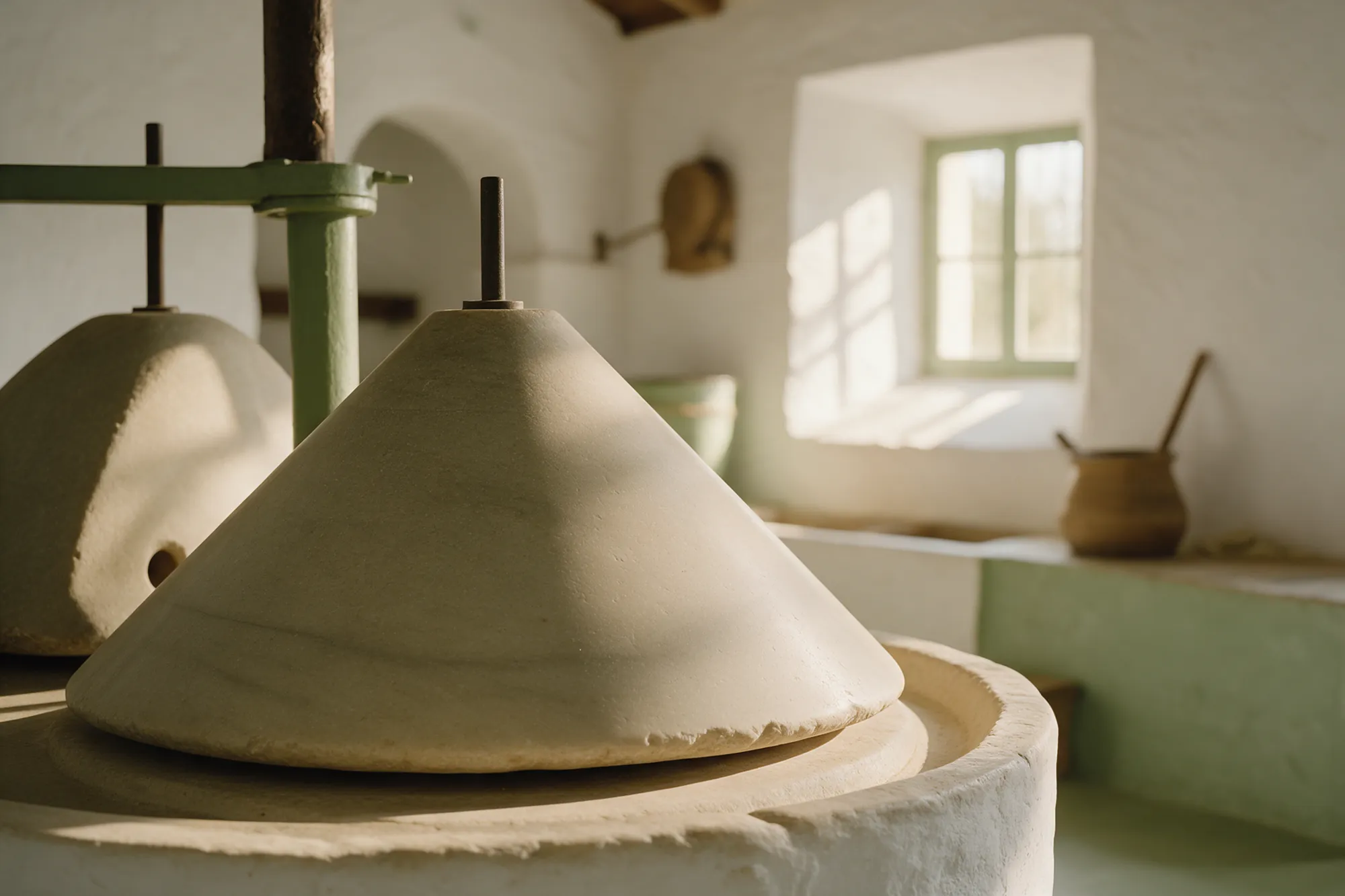
As we mentioned, centuries ago people already understood that, thanks to olive trees and their fruit, that is, olives, they could obtain olive oil by crushing that fruit. But… how? They were not aware of it, but faced with such a need they created a large stone “machine”, similar to a mortar, that could be more than two metres high.
As we have mentioned, they were similar to today’s mills, but there were also major differences. Early mills had a large screw holding the levers that worked in the process, applying pressure to the olives and allowing what we know as olive oil to be made. These mills also became so important to society that they were even placed right in the centre of each village, so that the distribution of olive oil was easier to control and in a more visible spot.
Another way of obtaining olive oil was with so-called beam presses. After the olives had been gathered in large baskets, they were tipped from a height into the container or hopper, and to grind the olives the hopper was turned by animals harnessed to it.