We have looked at almost every characteristic and property of Extra Virgin Olive Oil. Its differences, its qualities, its types… and even its uses in different customs and religions! But we cannot forget one truly relevant attribute (we will explain why later): Why does the density of olive oil matter?
The density of AOVE
What is the density of olive oil?
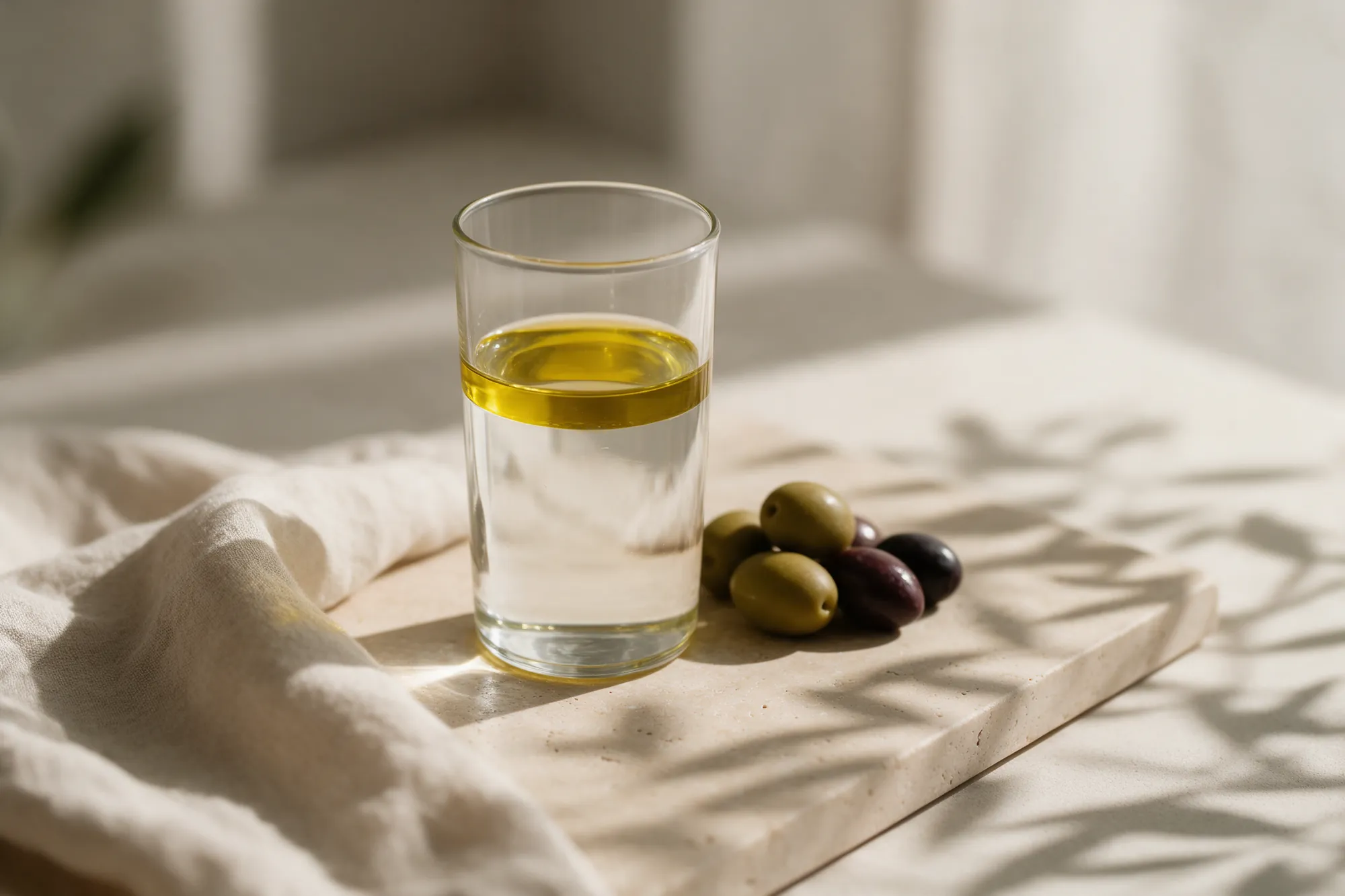
Do you remember studying the density of matter at school? Most of you will probably find it rings a bell, but not all of you could repeat what the physics textbook said. Density refers to the amount of mass in a given volume of matter or, put another way, the relationship between the mass and the volume of that substance. Still sounds like double Dutch? Let's try this… You will surely remember that classic school experiment of mixing olive oil and water in a container. We saw that the olive oil did not mix with the water, but rose quickly to the surface. This is because water is denser than extra virgin olive oil.
What is the density of Extra Virgin Olive Oil?
The density of olive oil is 0,916 kg/litre, but…. always? The answer is no. Temperature plays a key role in its density. The figure above only holds when the ambient temperature is between 16 and 17ºC. Remember that when AOVE is heated it expands (if you don't believe us, see for yourself when frying), and its density falls. It is as if it breaks down and becomes less compact. In fact, that is exactly what happens. By now you should understand what density is and that olive oil is less dense than water, but… are there differences between extra virgin olive oil and sunflower oil? Of course! The density of sunflower oil is 0,918 kg/ litre. The difference between AOVE and sunflower oil may not seem huge, but remember that in physics a thousandth can cause enormous changes. So how much does a litre of olive oil weigh? It weighs exactly one kilogram. Density is not the same as weight. You may be a little confused right now, but let us clear it up with that classic example from our childhood… Which weighs more, a kilo of feathers or a kilo of lead? They both weigh the same; what changes is the space you need to make up that kilogram of feathers. You would probably reach it sooner with a lead billiard ball than with a bag full to the brim with feathers.
Why it matters to know the density of olive oil
Believe it or not, it plays a crucial role in how it is made! The olives used to produce extra virgin olive oil must be rid of the liquid part (water) they contain. Only the fat should remain, at a precise temperature. Originally, this separation was done using bowls in which the juice of the olives was left to settle. Water and oil were separated simply by letting the density of each behave as nature intended. In this way, the water and any branches or solid matter sank to the bottom of the vessel or well where the process took place, leaving only the olive oil on the surface.
AOVE La Matilla: in pursuit of excellence
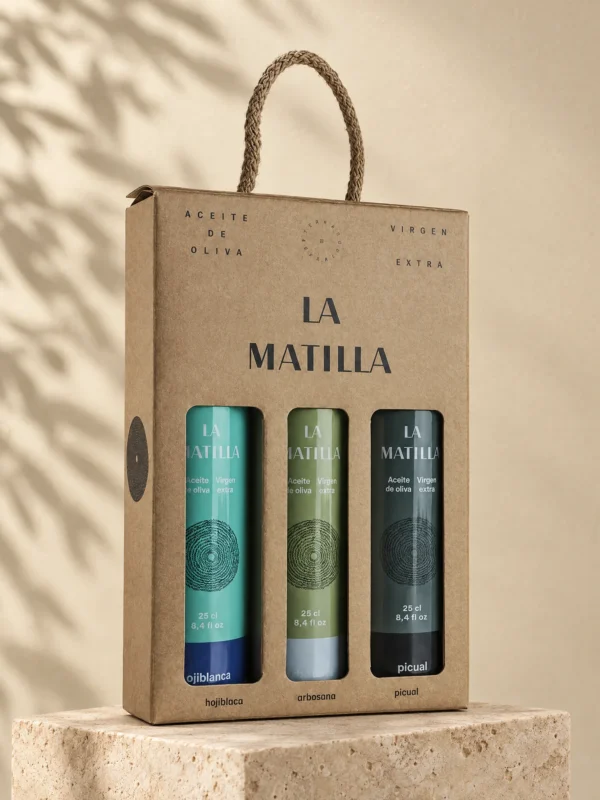
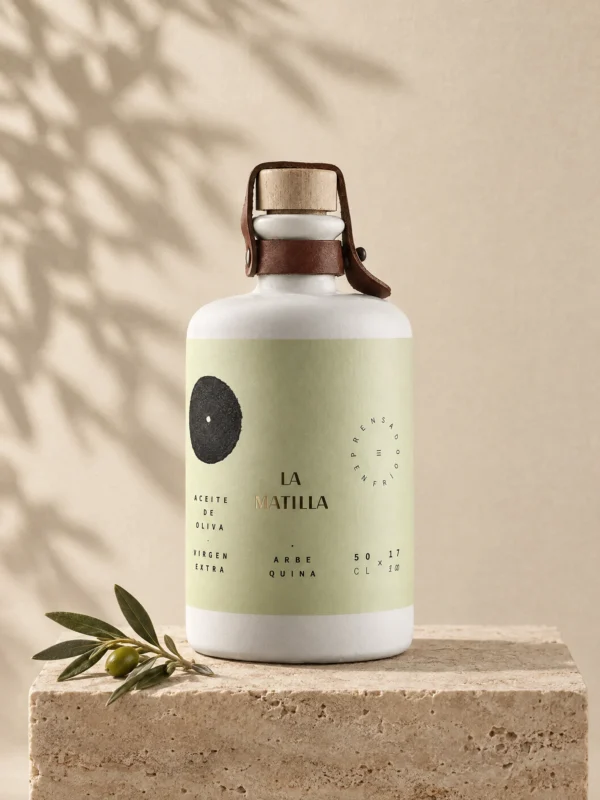
At Aceites La Matilla we are committed to a process of harvesting, processing and production that is as traditional and selective as possible. The olives are picked by hand, one by one, before they touch the ground. This way we ensure that only those in the best condition are used to obtain the juice. Another important feature of our harvest is that it takes place before dawn, between September and October, to avoid the hottest hours and preserve the olives' properties. Once picked, they go on to be cold-milled using capachos, barely 6 hours after leaving the tree. It takes between 13 and 14 kilos of olives to make 1 litre of AOVE La Matilla! If you would like to try a gourmet, premium Extra Virgin Olive Oil, here is the link to our online shop, where as well as buying it you can discover more about the qualities of this superfood, often called liquid gold!