Extra virgin olive oil is one of the most widely consumed foods in the world because of its many applications and uses. From cooking stews and other dishes with it to eating it raw in all kinds of preparations, such as salads or dressings, among many more. However, this very variety of uses may lead you to the following question: how should you consume extra virgin olive oil?
Taking Extra Virgin Olive Oil neat
And note that when we say neat, we mean eating the AOVE raw.
As we mentioned earlier, olive oil is used in cuisines all over the world and, therefore, how it is used in different recipes varies from one place to another depending on the local culinary tradition.
That is why, if we tried to cover every way AOVE is consumed around the world, you would need hours and hours to read our post and, like us, you would probably get tired before reaching the end… so let us move on to the most popular ones in our country!
First of all, we recommend that you visit our shop, because the information on our oils will serve as a guide to better understand the differences we are going to set out regarding which oil to use for each application.
Toast
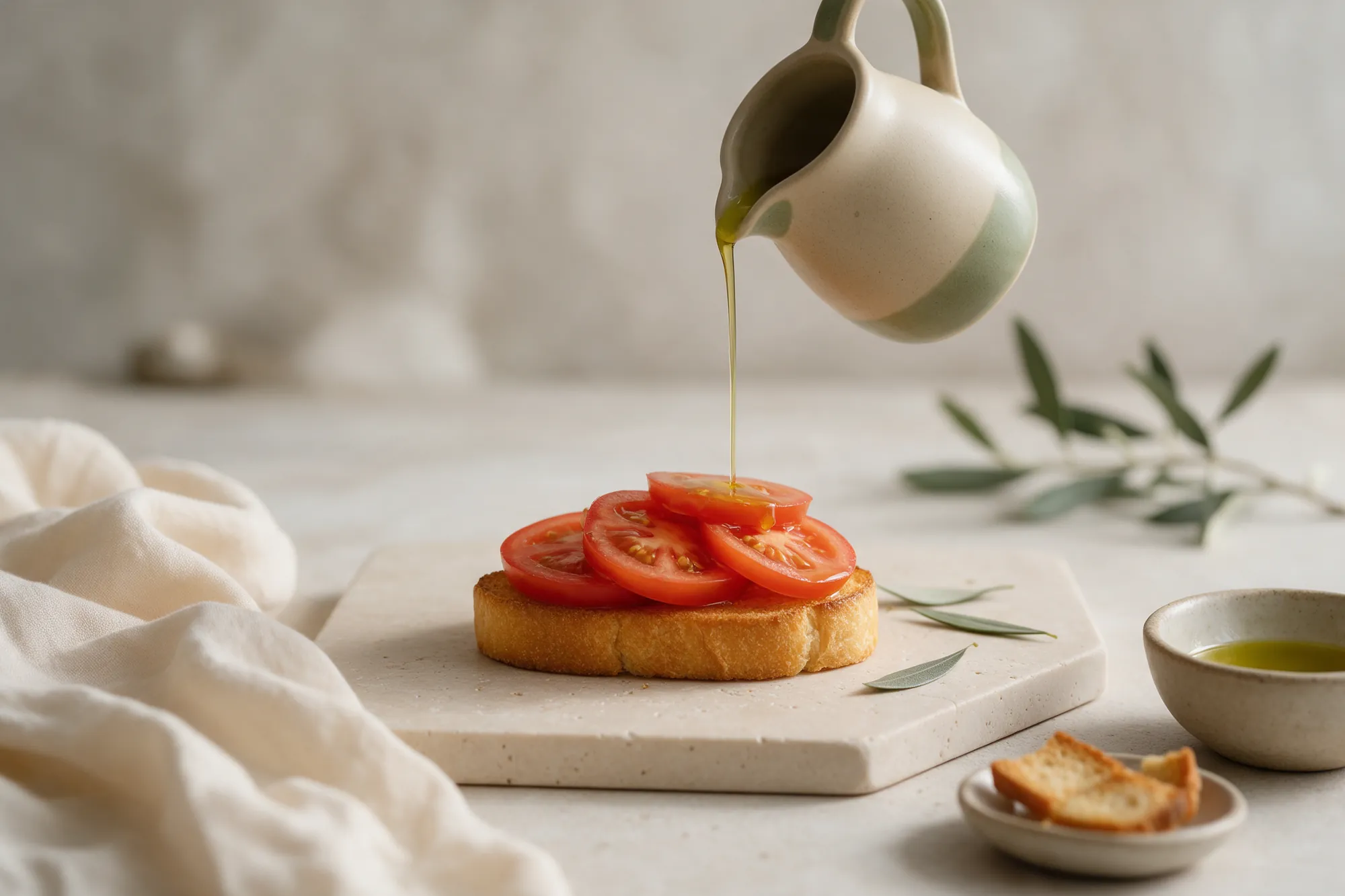
Who has never enjoyed (occasionally or every day) a slice of toast with a good olive oil?
Well, as we mentioned in our article on the differences between types of oil, Extra Virgin Olive Oil is the healthiest oil we can eat raw, both for its culinary properties and as far as health is concerned.
Depending on the type of olive used to make the AOVE, the flavour of the oil can vary enormously.
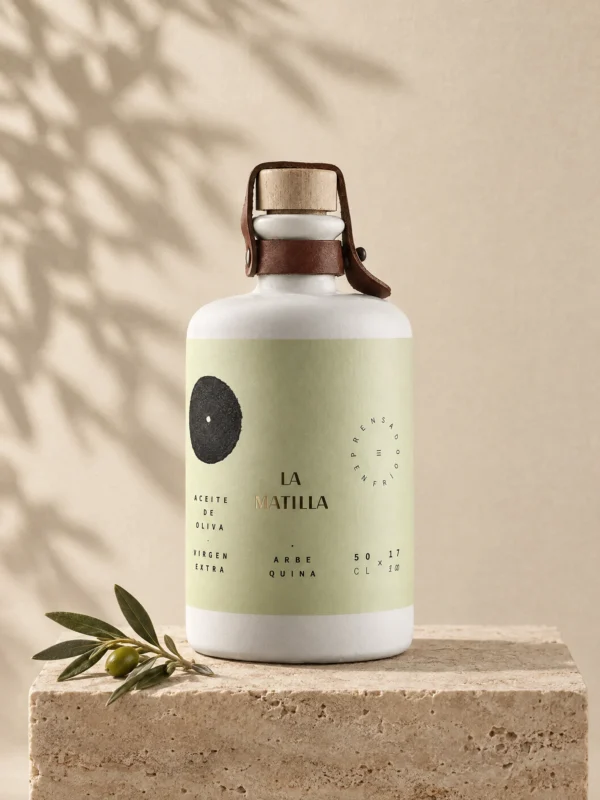
Those looking for a milder flavour should opt for Arbequina-type oils like ours, where there is barely a trace of the characteristic pungency of other, more intense extra virgin olive oils.
This type of oil is ideal for combining with another food on your toast, such as turkey, ham or some kind of cured sausage.
Now, if you love the intense flavour of oil and do not want to combine it with the taste of another product, we recommend our Arbequina version, in which you will notice much more of the characteristic flavour of AOVE.
Salmorejo and gazpacho
As with the use of Extra Virgin Olive Oil on toast, when making typical recipes such as salmorejo or gazpacho, intensity is also a subjective factor tied to what the consumer is really looking for in the final result.
If you want the flavours typical of these recipes, such as tomato or pepper, to come through, then you should use an Arbequina oil, which will barely mask the taste of these vegetables.
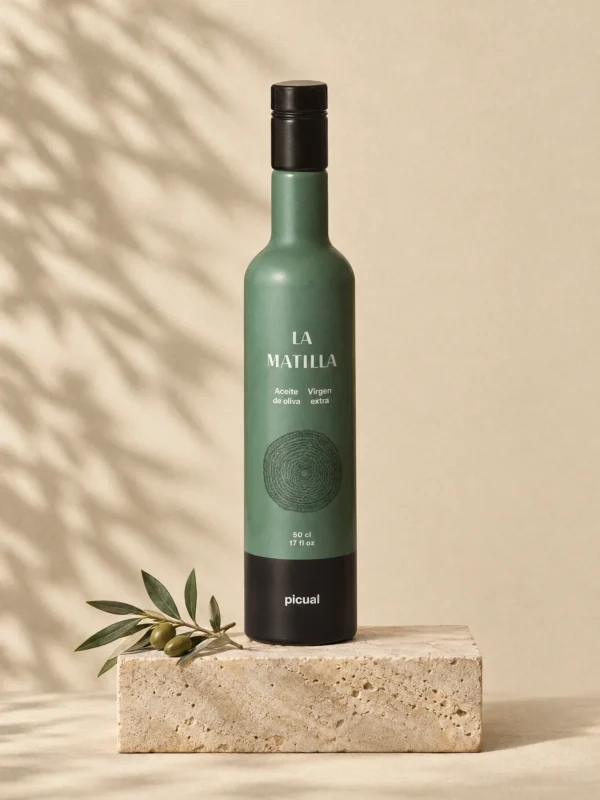
However, if you are passionate about intense flavour and like to finish this recipe with a drizzle of extra virgin olive oil, then we recommend our AOVE made with Picual olives.
Salads and dressings
It depends. Here we are a little more undecided, as we think the ideal choice depends on the type of salad you are making.
In vegetable salads, the ideal is to use the flavour of Picual AOVE to give the dish character, since we often use a salad to get by and do not bother with a large number of elements, such as tuna, chicken or cheese, that you would want to stand out from the rest.
That said, if you are going gourmet and want to make a salad with several ingredients, opt for Arbequina AOVE, as it adds texture and fruity nuances without overpowering the other sources of flavour, such as those mentioned above.
Extra Virgin Olive Oil for frying
Extra Virgin Olive Oil (AOVE) is a food that stands up perfectly to high temperatures.
The main difference is that when AOVE is subjected to intense heat, its nutritional properties change substantially, hence the widespread belief that fried food is not good for your health.
But be careful: everything in moderation is fine, so although we do not recommend overdoing fried food, who doesn't like a good fried fish?
Another feature of the oil is that it can be reused several times, as long as you store it properly and do not use it to cook different foods, because the flavour of one dish can pass to another… careful, or your chips might taste of fish!
A good way to extend this reuse is to strain the oil once it has cooled, which removes food residue that, when the oil is heated again, could pass its flavour on to the new dish.
As for which type of AOVE to use for frying, intense flavours will give the recipe more robust nuances and, as a result, the taste of the oil will remain in your dish.
On the other hand, if you use a milder AOVE such as Arbequina, there will be barely a trace that your dish has been fried, so you can better enjoy the qualities of the main ingredient cooked with this technique.
Extra virgin olive oil for vinaigrettes
Although this section could easily have been included in the part on eating it raw, we think it deserves a section of its own because of the uses it can have.
Vinaigrette is basically a sauce whose main ingredients are oil and vinegar. In other words, when we dress our salad we are, without realising it, making a vinaigrette.
But it does not end there: its uses have kept changing and multiplying, until we find all kinds of vinaigrettes, such as orange, grape, or the very well-known salsa verde.
There are mustard-based ones, ones with spices such as the “green sauce” presented earlier, with black butter, with nuts or with fresh fruit.
If you stop for a moment, you will see that, depending on the type of vinaigrette we are making, we will want some nuances to stand out more than others. So rather than decide for you which one to use, we are going to explain the main difference between Arbequina oil and Picual extra virgin olive oil so that, with this information, you can choose the one that suits you best!
Arbequina extra virgin olive oil for vinaigrettes
This type of AOVE is characterised by fruity nuances and a mild flavour, and you will hardly notice the pungency of other AOVE oils. It is undoubtedly the most recommended for this kind of dish, but as we said before, you decide according to your own tastes and preferences!
Picual extra virgin olive oil for vinaigrettes
Moreover, Picual AOVE has more pungency and aftertaste than its Arbequina counterpart. We recommend this option if you want to make vinaigrettes with spices or nuts, where the nuances of the oil should stand out, as opposed to other vinaigrettes, such as fruity ones, where the freshness of the other ingredients is what you are after.