Olive oil has accompanied humanity since time immemorial, whether for culinary, cosmetic or religious purposes. In the latter case, it was used as fuel to light sacred temples.
Although the olive tree was already being used in the Upper Palaeolithic (12.000 BC), its cultivation is thought to have begun with agriculture. The first plantations originated on the shores of the eastern Mediterranean, specifically in the Syro-Canaanite region, which today comprises Syria, Lebanon, Palestine and Israel, from the 5th millennium BC to the beginning of the 3rd millennium BC.
Origins of olive growing in Egypt:
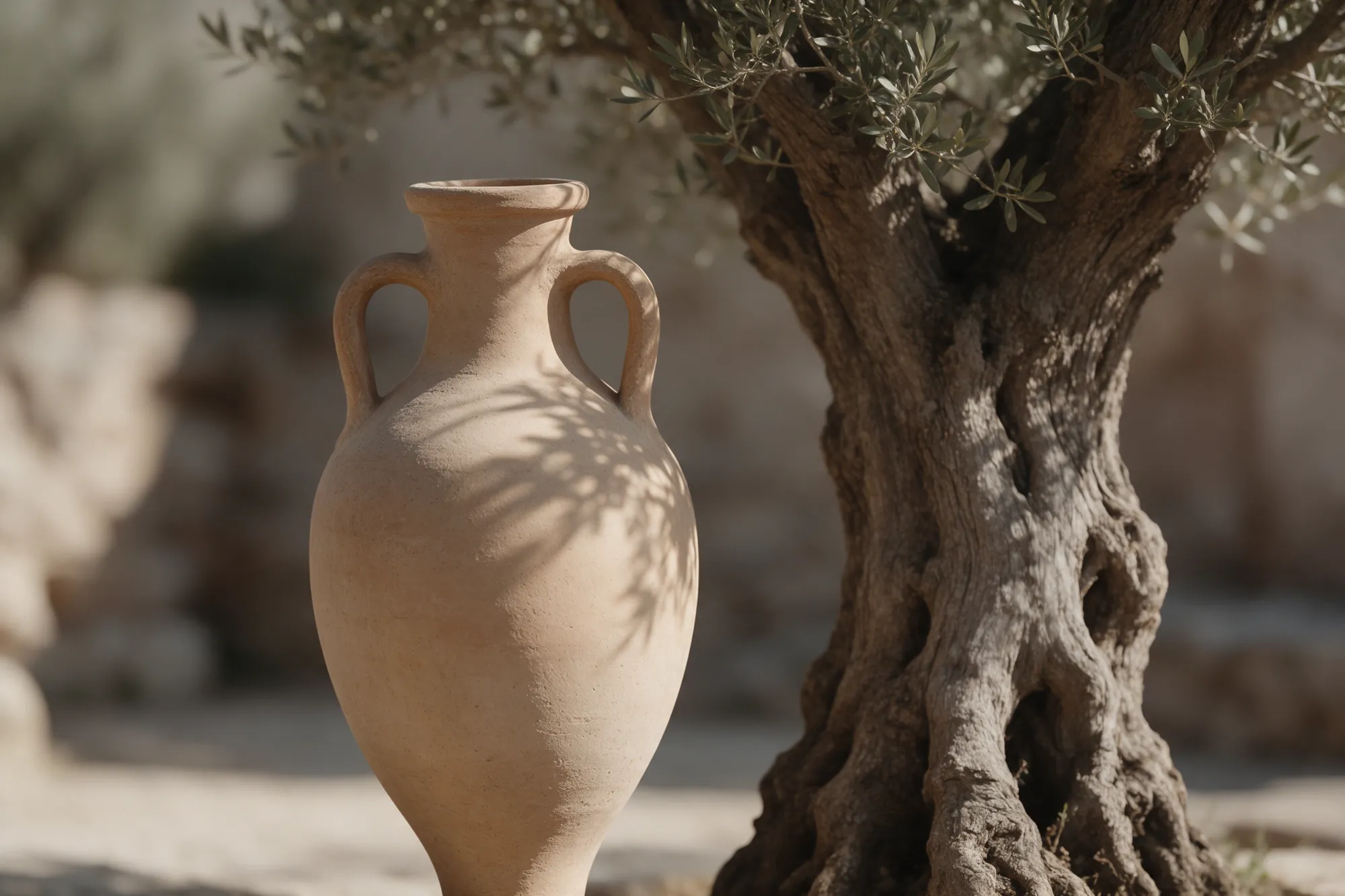
In Egypt, olive growing began around 2000 BC, and olive oil started to be used for cosmetic purposes; the Egyptians already named Isis as the goddess who taught mankind how to grow olives. The Egyptians themselves began trading olive oil. Inside burial chambers you can see depictions of vessels and amphorae holding olive oil. It would soon spread across the Mediterranean, becoming part of the trilogy of bread, wine and oil.
Origins of olive farming in Greece:
In the middle of the 2nd millennium BC, with the Mycenaean conquest of Crete, olive farming also appeared in Greece, as there are documents recording oil production and its ritual use from the early Minoan period.
In the mythical founding of Athens, the olive tree plays a very important role: it is said that both Athena and Poseidon wanted the new city under their protection, and to win it they offered the Athenians an olive sapling. Zeus, for his part, also decided to offer them a “gift”, but they preferred the gift of Athena and Poseidon.
The Greeks also coated themselves in olive oil mixed with ash (a primitive form of soap) during gymnastic competitions, then scraped it off with a bronze or copper tool called a strigil.
It was not until the 7th century BC that the Greeks began exporting their oil production to Italy during their period of colonial expansion.
Origins of olive growing: the Phoenicians:
It was the Phoenicians (the great traders of the ancient Mediterranean) who brought olive growing to the southern coasts of the Iberian Peninsula, present-day Andalusia, around the 11th century BC.
That land soon became one of the main areas producing liquid gold. It was also they who introduced olive oil production to Sardinia and the Maghreb.
Origins of the olive oil trade in Rome:
The trade in and consumption of olive oil spread to the coasts of Tripolitania, Baetica (Andalusia) and the French Mediterranean, which became the three great centres of oil production during the centuries of the Roman Empire.
Origins of the leading olive oil producer in Andalusia:
The dominance of Andalusia and Jaén in world olive oil production dates back to the settlements of the Roman Empire in Hispania.
In Roman times, Baetica, what we now know as Andalusia, was the main olive oil producing territory during the centuries of splendour of the Roman Empire.
Today, Andalusian production is still centred on the Guadalquivir valley, although in the past the balance lay somewhat further west (in what we now know as the province of Córdoba); above all, the province of Jaén remains the leading olive oil producer.
If you would like to know how olives are harvested, click here