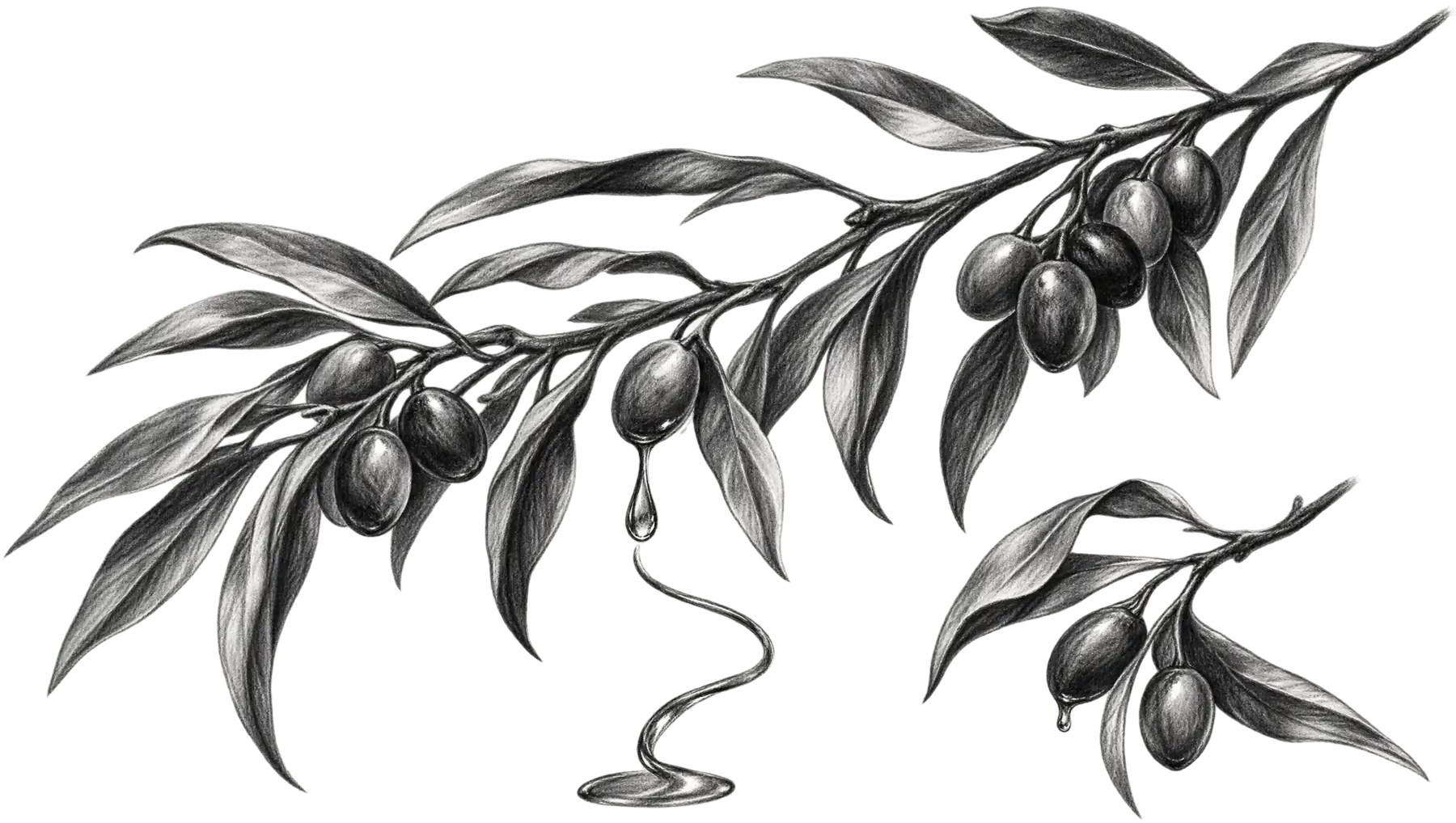
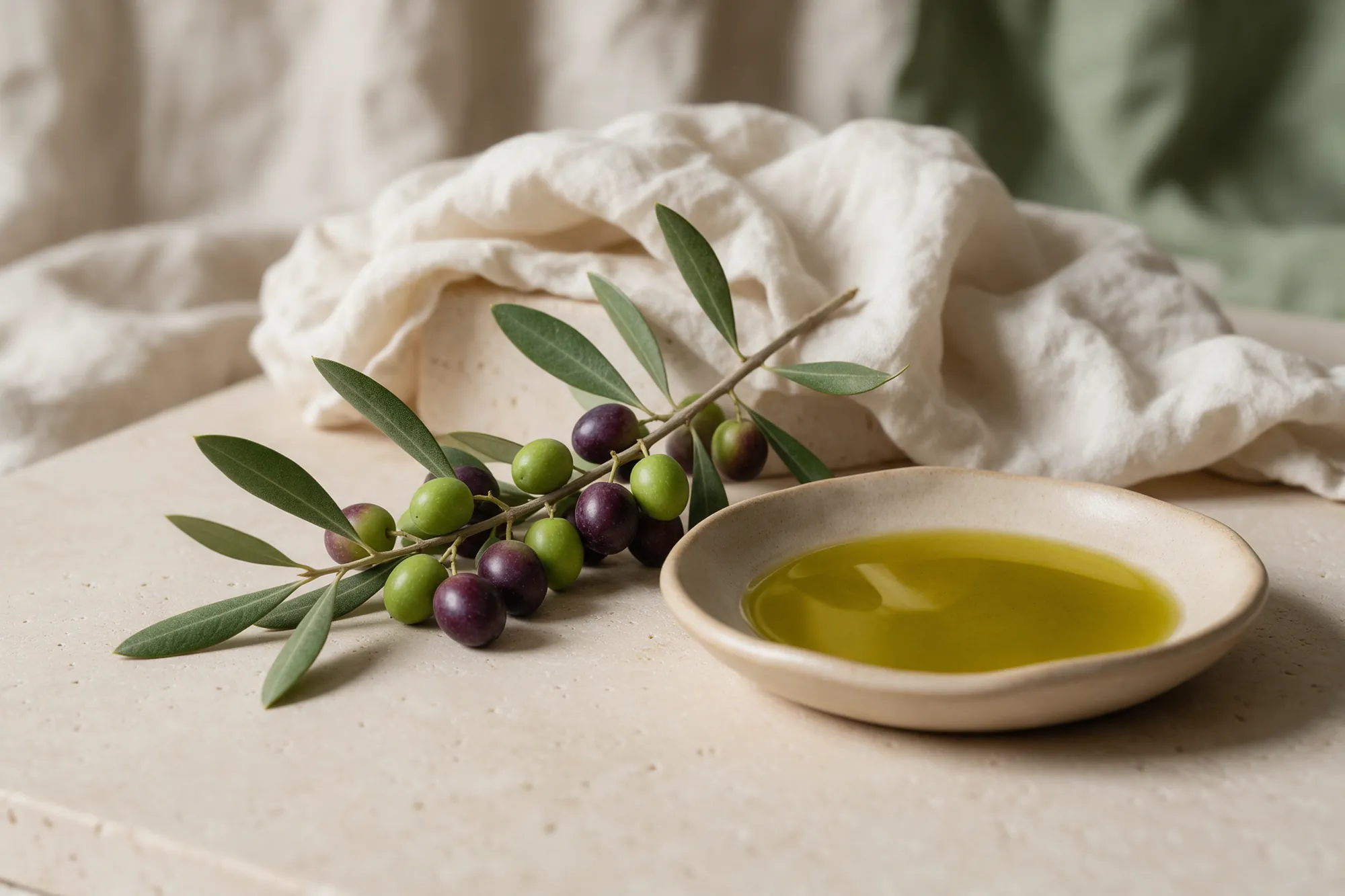
Arbequina olive oil is an olive oil of great smoothness, light, with a fruity aroma, a striking green colour and a pleasant, delicate feel. Nutty aromas predominate, but depending on the variety, notes of ripe fruit may appear.
Arbequina olives give this oil a high percentage of oleic acid, which helps reduce bad cholesterol (LDL) and raise good cholesterol (HDL). In addition, as it contains lower polyphenol levels than other olive oils, it helps improve the cardiovascular health of people who consume Arbequina oil.
What is Arbequina olive oil?
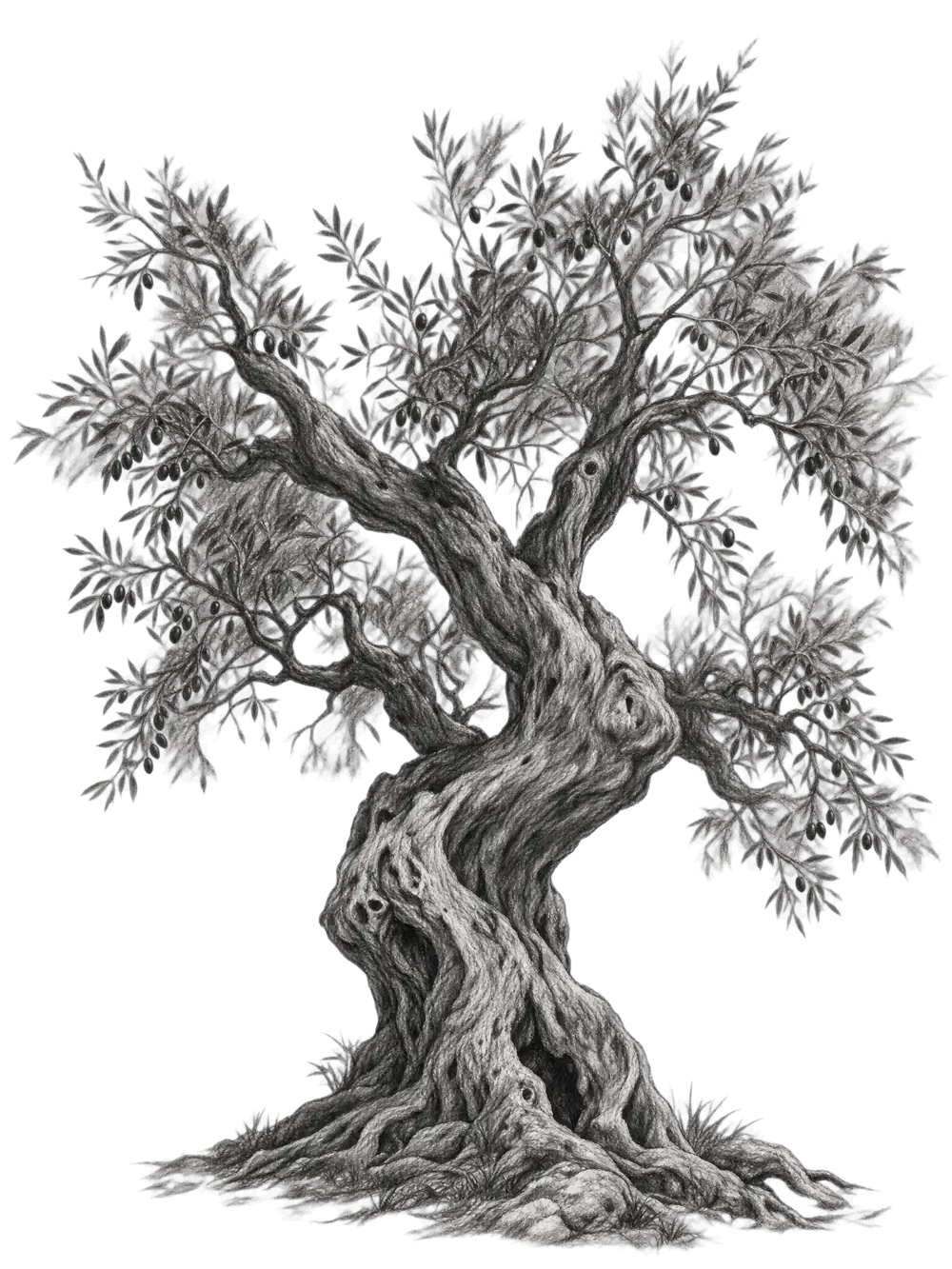
Arbequina olive oil is obtained from the Arbequina olive, a variety of olive tree that comes from Palestine. It reached Spain thanks to the Duke of Medinaceli in the 17th century, who made an Arbequina olive plantation at the castle where he lived. This castle-palace was in Arbeca (Catalonia), and that is why it is called Arbequina olive, although it is also known as Arbequí, Arbequín, Blancal Herbequín, Oliva de Arbela, Oliva de Borjas Blancas and Olivas del Manglot.
What are the characteristics of Arbequina olives?
- High resistance to cold
- Low vigour
- Low tolerance of calcareous soils
- Small size (between 1 and 2 g)
- Early ripening
- Low resistance to oxidation
- High productivity
- High oil content
- Very low pulp-to-stone ratio
- Medium resistance to fruit detachment
Uses of Arbequina oil
The Arbequina olive is used to produce olive oil because of its low pulp-to-stone ratio. Although it is one of the smallest olives, it is the one that allows the most olive oil to be extracted. That is why Arbequina olive growing has spread throughout Spain, and it can be found above all in Catalonia, Andalusia and Zaragoza.
Arbequina olive oil has a sweet, mild flavour and is therefore used in cooking more than other oils with a stronger taste. Arbequina oil is ideal for introducing olive oil to children, as well as people who are not used to consuming olive oil, as is the case in some other countries.
We can also use Arbequina olive oil to make mayonnaise because of its mild flavour, and as a substitute for butter in baking, especially in sponge cakes
It is also ideal raw at breakfast, accompanying toast with tomato or even jam. In salads it goes perfectly with all kinds of fruit, such as kiwis, apples or raisins, and we can even use Arbequina olive oil to accompany fruit salads and fruit purées.
Although this variety of olive oil is not the most stable, it would be better to use other varieties for deep frying and stews, though there is no problem in using it instead of sunflower oil.
Where to buy Arbequina olive oil?
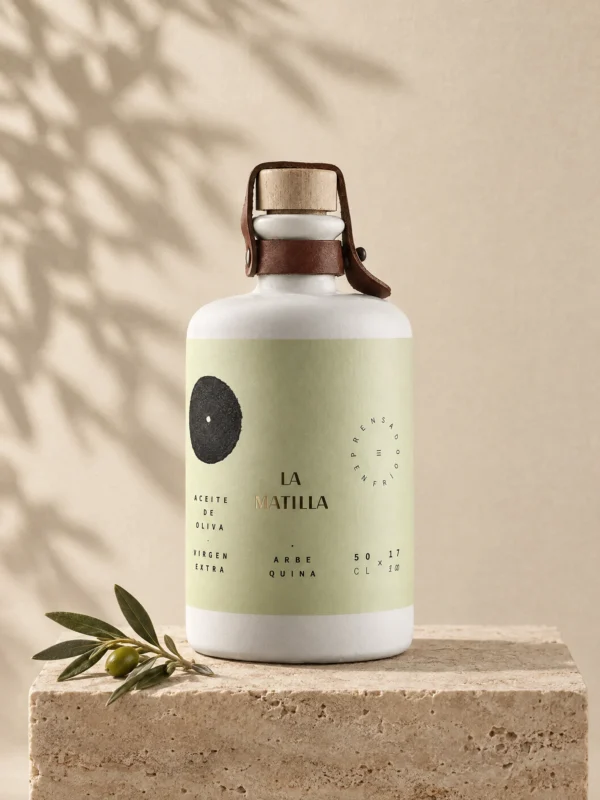
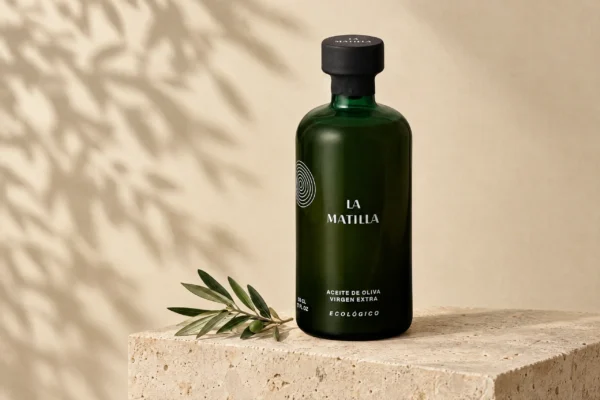
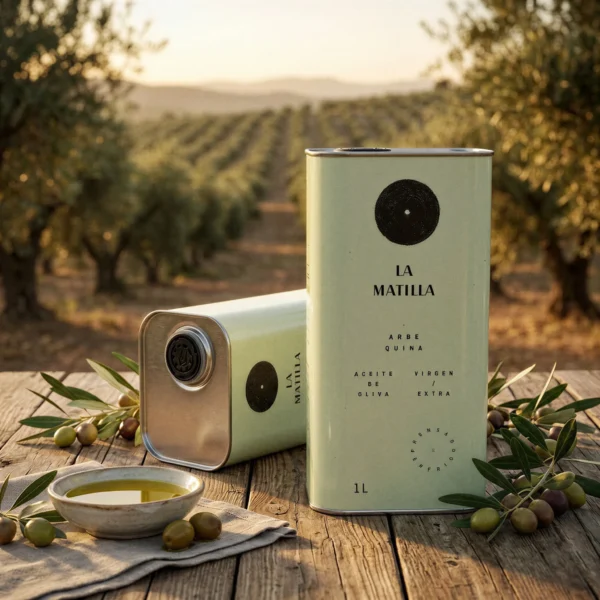
If you want to buy Arbequina olive oil to include in your diet, in the online shop of Aceites La Matilla we have this variety of gourmet olive oil so that you can enjoy its mild flavour in all your dishes.
Meet the Aceites La Matilla family
Buy gourmet extra virgin olive oil now in our online shop
Which oil is better, Picual or Arbequina?
As we have already mentioned, there are differences in taste as well as in chemical and nutritional terms. Depending on the olive used, these aspects will vary enormously!
The Arbequina olive takes its name from the town of Arbeca, in Lleida, where this fruit was first cultivated. As for its characteristics, it has a much milder, more aromatic flavour than Picual, with a predominantly sweet taste and less pungency in the throat than other types of oil.
It is precisely these characteristics that make it ideal for salad dressings and for eating raw in general. But remember, it all depends on taste!
The Picual olive, on the other hand, owes its name to the shape of this type of olive, which is elongated and has a kind of point at its lower end.
In terms of taste, its intensity and bitterness predominate. In fact, the earlier the harvest, the higher the level of pungency. Like the other fruits of its family, it stands out for a high presence of oleic acids, and it differs from the rest in its tolerance to heat, making it ideal for use in cooking.
What is the mildest extra virgin olive oil?
Now that we have defined the main differences between Picual and Arbequina olive oil, we can conclude that in smoothness, the winner is Arbequina!
It has fruitier, sweeter flavours and is less pungent than other olives. That is why it enjoys such great popularity. It is clear that it all depends on taste, but a great many people want a touch of oil in their recipes without it dominating and so diminishing the flavour or taste qualities of the other ingredients.
Properties of Arbequina extra virgin olive oil
The main culinary characteristic of Arbequina extra virgin olive oil is undoubtedly its sweetness, acquired mainly because it is a fairly aromatic oil, with notes such as banana or apple.
Of course, the bitter aftertaste so present in some olive varieties is absent here.
When an Arbequina olive oil has been made from ripe fruit, it can recall the fruit purée given to small children. And it is precisely this aroma that is caused by a high percentage of polyunsaturated acids.
Its concentration of oleic acid, which helps reduce bad cholesterol (LDL) and raise good cholesterol (HDL), is quite high. For this reason, in terms of health, Arbequina is without doubt still highly recommended!
Finally, another characteristic of extra virgin olive oil is that it contains large amounts of polyphenols. It is true that their concentration in this variety is not as high as in other types of olives, but it is still a good option for improving our cardiovascular health.
Price of Arbequina oil
There are no great differences in the price of extra virgin olive oil depending on the olive used; in other words, it is not a factor that has a notable influence on it.
The price of AOVE is usually set by other attributes that affect it more directly, such as harvest costs, the location of the harvest, the prestige of the brand or even the country where the extra virgin olive oil is sold.
And this is mainly because, as we know, depending on the geographical location the perceived value of this food is higher or lower. Countries such as the USA are paying more and more attention to so-called liquid gold, as are central Europe and Asian countries.
Gastronomy is undoubtedly a cultural matter that varies enormously from one part of the world to another. Its use can therefore vary: in Spain, for example, we use this product for cooking, whereas on other continents butter is the basis for that task.